

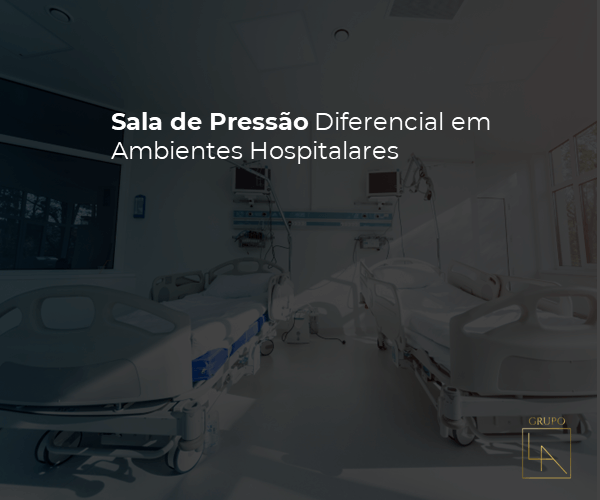
In recent years, especially with the global Covid-19 pandemic, we have seen the importance of controlled hospital rooms, which prevent the spread of viruses and bacteria to other hospital wards, bringing greater safety to employees and patients.
In hospital environments, different types of patients occupy rooms and beds, with different infections and health conditions. Given the special needs that each patient demands, there is a need to create controlled environments that guarantee the safety of all patients, employees and visitors to the building who circulate through the rooms.
There are various methodologies adopted to create “ clean rooms ”: environments designed to prevent the entry or exit of particles and microorganisms, in order to ensure that the air condition reaches the expected levels and, for this, different air conditioning systems are suitable, ensuring adequate humidity levels and air quality.
Therefore, two main types of controlled environments emerge as solutions, with their main difference being in relation to pressure: positive and negative pressure rooms. The pressure control condition is used so that atmospheric conditions do not interfere with the internal environment, making it safer and more controlled.
Positive pressure rooms operate with internal pressure greater than atmospheric pressure and protect the environment from external infiltration of antigens that may come from similar environments that may be contaminated. These rooms have controlled air intake, which undergoes a filtration process that prevents it from bringing in airborne organisms from outside. They help keep patients with vulnerable immune systems protected from external contaminants, in addition to helping to create a clean room, with control of viable and non-viable particles, allowing for the storage of surgical materials at the time of their use.
Negative pressure rooms are built to isolate patients who have diseases that can spread through the air, such as contamination by bacteria and viruses, as is the case with Covid-19 . In these rooms, the internal pressure is lower than atmospheric pressure and the air intake is lower than the output. Thus, the air is forcibly expelled through exhaust fans to the outside of the building, thus forcing the contaminated air out, which will be filtered and the contaminants retained in the high-efficiency air filters (HEPA) that protect the atmospheric air and its surroundings. This ensures the integrity of the air extracted from negative pressure environments.
Rooms with properly developed architectural layouts allow for the successful application of the differential pressure concept and have proven to be very effective in ensuring the quality of controlled internal environments, responding to the demands of healthcare institutions, ensuring control of the air and the spread of contaminating organisms, facilitating the work of professionals and protecting the lives and health of hundreds of people.
To design and build spaces like these, it is essential that those involved have the ability to combine different architectural solutions with health services and procedures, in addition to ensuring an increasingly modern enterprise, be it a laboratory, hospital or clinic. The LA group works by integrating the best partners, to apply more efficient and safe solutions with a focus on the best experiences for all users.
Access more on our blog
Recent Comments