
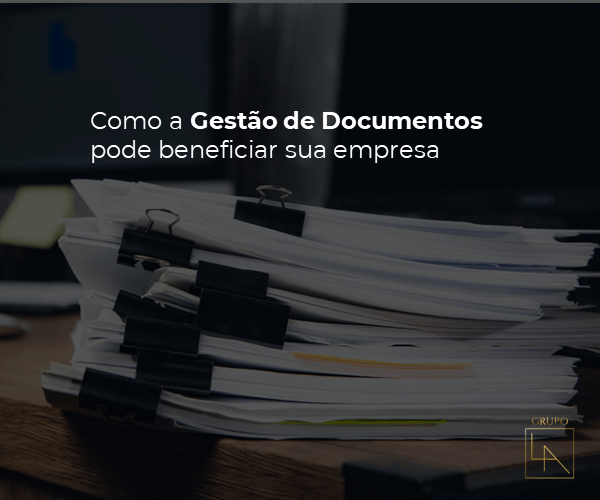
Many organizations have difficulty managing regulatory documents, which is a real problem, since poor management can simply lead to the ruin of your business. In this post, we will talk a little more in depth about the best way to do it and how document management can benefit your company.
It is worth mentioning that document management needs to follow some rules and good practices to generate savings and agility, and these are the good practices that we will list in today’s text.
Have a great read!
What is document management?
Document management is the sum of numerous practices that an organization adopts with the purpose of ensuring greater agility in production, archiving, as well as access to the records that are most important to the company.
It is worth mentioning that the main intention is to make it easier to use documents in everyday life, meaning that searches for data become more organized and, consequently, more efficient.
Each organization, according to its own profile, can adopt its own practices and routines in this regard. After all, a small company does not need to adopt the same number of rules as a shopping mall, for example.
Why is document management important?
Managing regulatory documents is important to streamline the routine of those responsible for consulting data to make decisions.
In this sense, documentation is organized from the moment the document is received, to the consultation, and to the receipt and archiving in folders. The easier it is to access documents, the faster the process will be.
In view of this, having quick access to regulatory documents and tax certificates will ensure an increase in your team’s productivity, in addition to improving the quality of the service and optimizing the space for storing documentation.
As a result, your company will be able to reduce costs across all financial operations, saving time and gaining control and traceability.
What can poor document management lead to?
Above, we saw the importance and how document management can benefit your company, providing more agility throughout the process. However, poor management, on the other hand, can bring disastrous results, such as:
- Loss of documents;
- Increased bureaucracy;
- Disorganization;
- Cost growth;
- Information leak.
When there is poor document management, the company not only wastes time finding a document, but it also increases costs, as an employee wastes a lot of time finding a document.
Furthermore, this makes it easier for information to leak, which compromises the company and even leads to significant losses.
How to manage regulatory documents?
To manage regulatory documents, you need to follow a small step-by-step guide that will help your company become more organized.
Start by organizing the folders
The first step is to categorize documents by subject, client, process, taxes. You can even create subcategories to make this management even easier.
Consider where these documents will be stored and think about how each folder or subfolder can be used to store the documents. The more organized the file, the better.
Find out the useful life of each document
Each company document needs to be archived for a certain period of time. And if the document is not able to survive that time, a duplicate copy must be requested.
Just to give an example, bank statements need to be kept for 5 years, while financing and consortiums need to be kept on file until they are paid off.
A proof of social security obligations, for example, must be kept on file for 30 years, whereas a property registration certificate only needs to be kept for 30 days after it is issued.
Therefore, it is worth considering that in some cases it will be necessary to request a second life for the document so that it survives the necessary time that it needs to be kept.
Digitize your company’s documents
With the arrival of technology, many organizations are already digitizing documents, especially since nowadays it is no longer necessary to file them on a PC, as they can be stored in the cloud.
This digitalization not only brings organization to the company but also much faster search for a specific document. Not to mention that it avoids the need for a huge physical space.
The result is greater agility in management, as well as cost reduction due to the speed with which documents are found.
Furthermore, digitalization also provides greater integration between the company’s departments, avoiding the need for just one person to handle the file.
And a good alternative on the market for managing documents is LA_docs, the system developed by LA . It is an intuitive and very easy-to-use platform that works in a 100% web-based, high-availability environment.
Recent Comments